Multi-Agent Orchestration Platform
Orchestration, cognition, and evolution
Three systems that work together. Atlas coordinates. SimLink thinks. Colosseum evolves. The infrastructure that makes autonomous AI systems actually work in production.
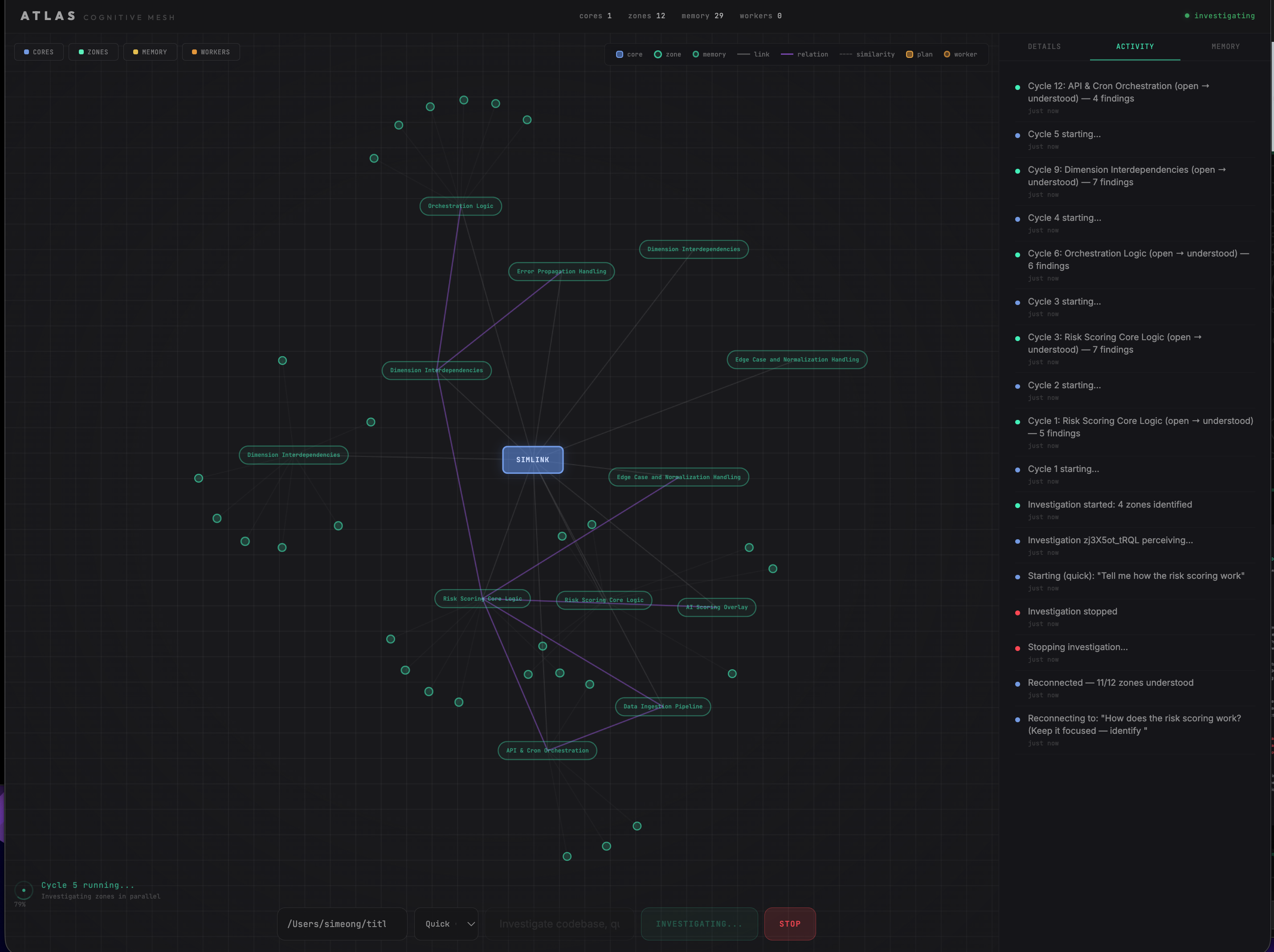
Cognitive Mesh
The interface
The Stack
Three systems, one architecture
01 / Cognition
SimLink
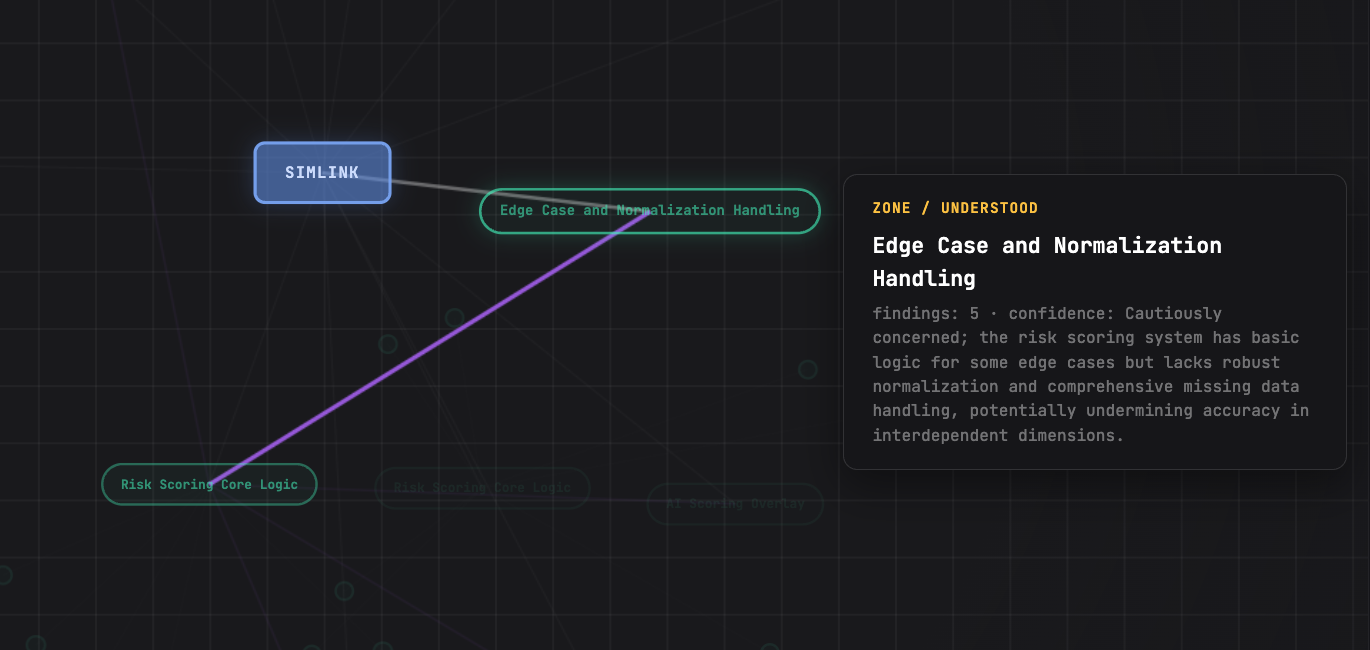
The cognitive layer. SimLink decides how agents think, not just what they do. It manages the balance between exploration and exploitation, determining when an agent should keep investigating versus when it should commit to action.
Situation awareness gates assess confidence levels at each step. Competitive attention mechanisms ensure agents focus on the most promising paths. The system doesn't just execute plans, it reasons about whether the plan is still the right one.
- Explore/exploit scoring for decision-making
- Situation awareness with confidence gating
- Competitive attention across parallel domains
- Dynamic reasoning depth based on task complexity
- Bridge between Atlas orchestration and agent cognition
- Multi-cycle drive with progressive refinement
02 / Orchestration
Atlas
The orchestration engine. Atlas decomposes complex work into a dependency graph, dispatches parallel workers into isolated git worktrees, and merges results back. Each worker operates in its own environment with enforced file ownership boundaries, so no two agents can edit the same file.
Exposed as an MCP server with full lifecycle management. Start a run, submit a plan, dispatch tasks, pause, resume, query memory. The orchestration layer that sits between human intent and autonomous execution.
- Parallel workers in isolated git worktrees
- Enforced file ownership across agents
- Dependency-aware task graph execution
- Auto-merge with conflict resolution
- Full MCP protocol with 20+ tool endpoints
- Persistent memory across sessions
$ atlas_run_start
  objective: "Refactor auth system"

$ atlas_plan_submit
  bundles:
    worker-1: auth/login.ts, auth/register.ts
    worker-2: auth/middleware.ts, auth/guards.ts
    worker-3: tests/auth.test.ts

$ atlas_run_status
  worker-1: completed (worktree: /tmp/atlas-w1)
  worker-2: in_progress
  worker-3: waiting (blocked by worker-1)

$ atlas_run_drive
  merging worker-1 → main
  dispatching worker-3...
03 / Evolution
Colosseum
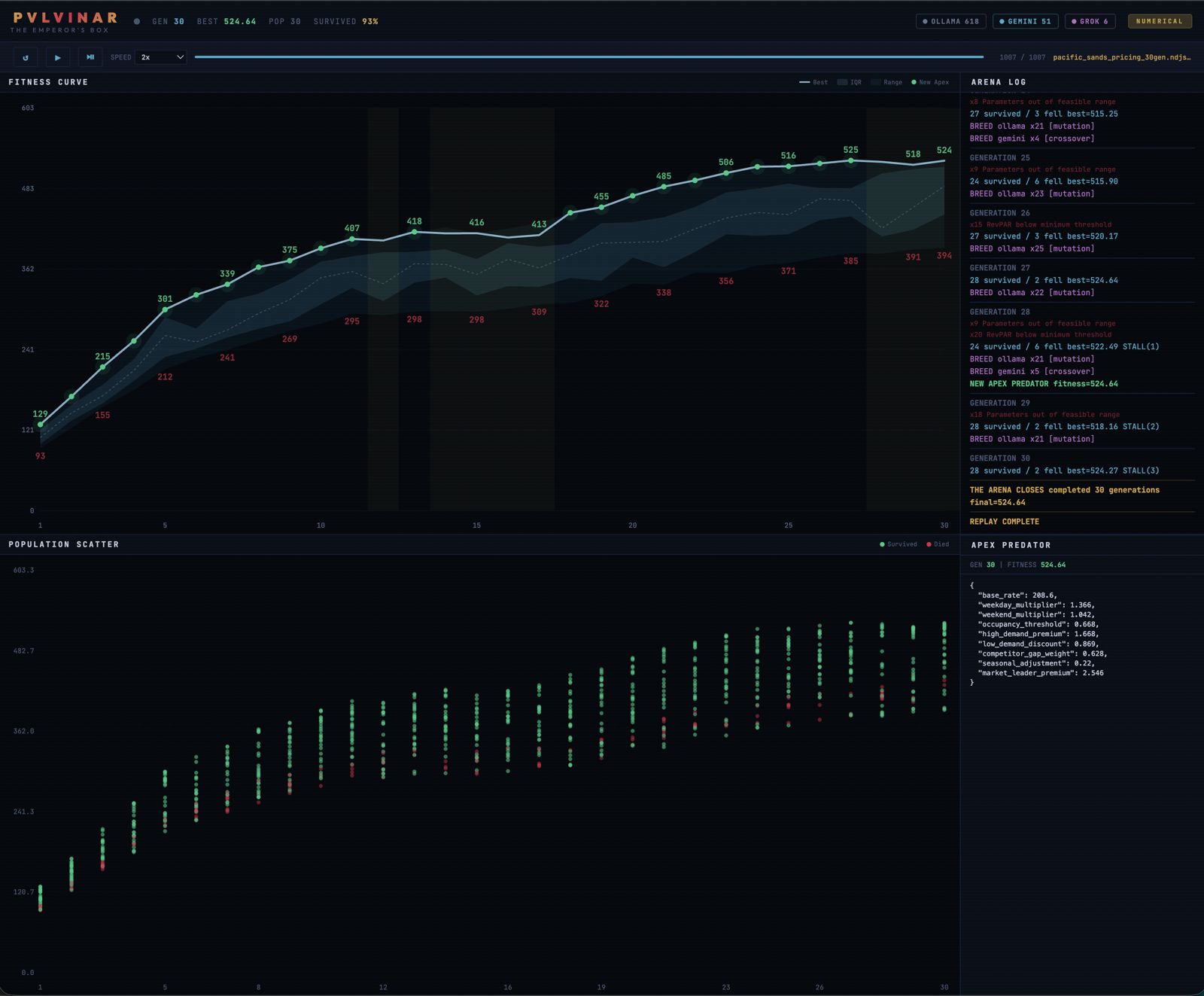
The evolutionary engine. Colosseum treats system parameters as organisms in a population, running them through competitive selection to find optimal configurations. Instead of manually tuning thresholds, you define what success looks like and let evolution find the path.
Validated against real-world data with holdout sets. The system evolved pricing parameters to within 1% of actual revenue on production data. When the AI-generated configurations outperform human-tuned ones, you know the evolutionary pressure is working.
- Evolutionary parameter optimization
- Population-based competitive selection
- Holdout validation against real-world data
- Within 1% of actual revenue on production metrics
- SimLink-driven domain analysis for fitness evaluation
- Automatic convergence detection
Go Deeper
See the architecture
The full system architecture, component diagrams, and technical decisions behind the stack.
The Guts